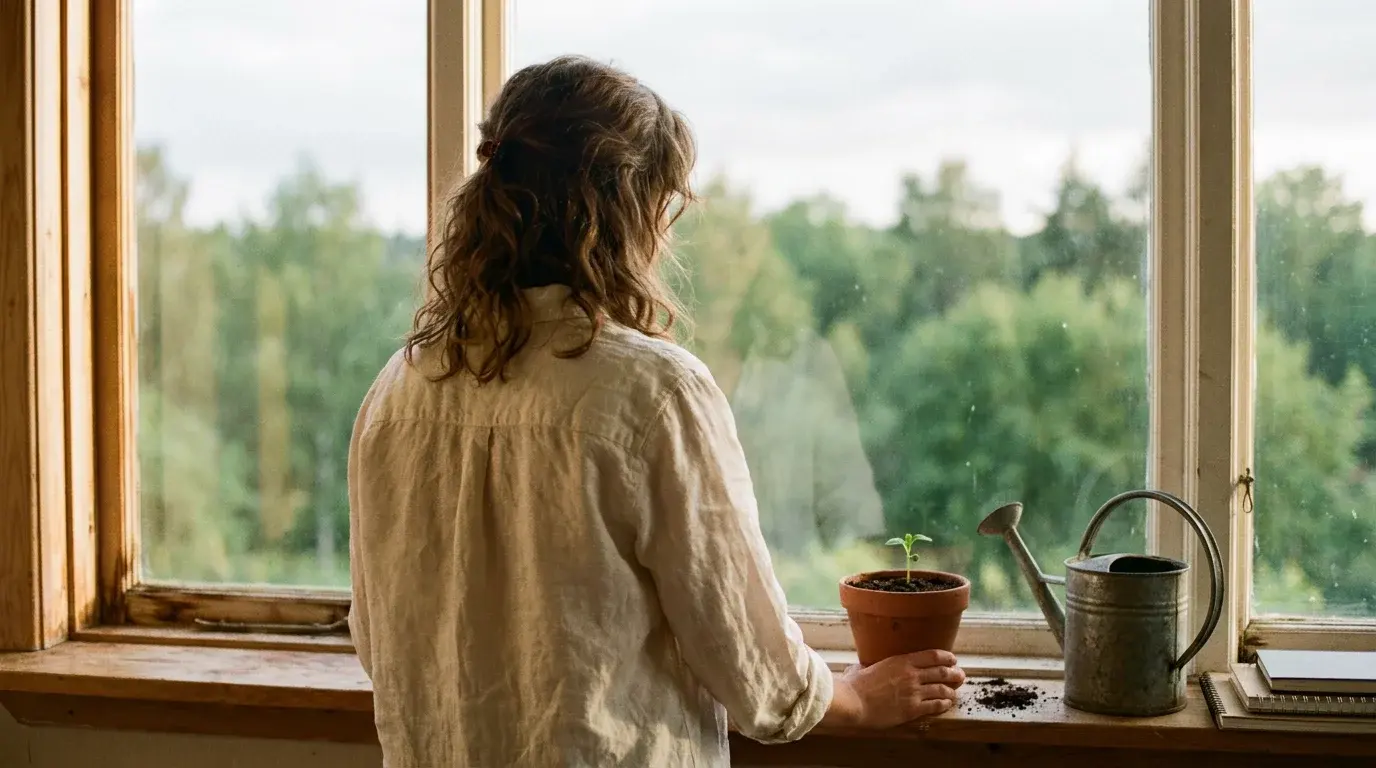
Start Small. Start Aligned. Start Now.

If you are wondering what would make your work feel more like your own, I’ll say this gently: you don’t have to decide your whole future at once. A small side project can be a way to explore what lights you up.
Not another obligation. Not something you “should” do because it’s trendy. Something aligned — something that brings excitement, curiosity, and a sense of yes back into your days.
A side project does not have to become a business. It can be a way of getting to know an interest, or a part of yourself that has had little room.
Why a side project (and not a big leap)?
Because a little space to explore can matter.
When you need an idea to become the answer to everything, it can be harder to notice whether you enjoy it. A small project leaves room to learn before making a larger decision.
Think of it as a question you can explore in daily life.
Step 1: Find an aligned idea (not a “good” idea)
An interest worth exploring may have one or more of these qualities:
You find yourself returning to it
You lose track of time when doing it
You feel more energised after doing it
You would enjoy learning more without needing to be good at it immediately
Instead of asking “What could make money?”, ask:
What do I already love talking about?
What problems do I naturally help people solve?
What feels exciting, even if it feels a bit scary?
What feels meaningful deserves attention alongside the practical realities of your life.
Step 2: Begin within the space you have
The first step can be a small experiment that fits your time and responsibilities.
You can start with:
Reading about something that interests you
Trying a creative activity for an afternoon
Talking with someone whose work you are curious about
Noticing how you feel before and after trying something new
Perfection is not required. In fact, it’s usually the thing that blocks you.
Your first version is allowed to be messy.
Step 3: Make a little room regularly
This is the part most people skip.
You don’t need massive action. A little regular attention can be enough:
10 minutes writing
One question explored
One idea noted down
One conversation started
Small moments can help you learn what you want to return to.
Over time, you may discover whether this interest belongs in your work, your free time, or simply in this season of your life.
Step 4: Let it evolve (don’t trap it too early)
Your side project doesn’t need a five-year plan. It needs room to grow.
What you start with is rarely what it becomes. Stay in conversation with it. Listen to feedback. Notice what feels alive — and what doesn’t.
Alignment is dynamic. Let your understanding change as you do.
My personal spin (and why this matters)
Every meaningful thing I’ve built started as a side project — something done alongside life, not instead of it. The magic was never in the scale. It was in the devotion.
It also taught me how personal questions of purpose can be.
At Orykl, that is a space for reflection with a spiritual practitioner: what matters to you, what you have outgrown, and what you want to understand about yourself.
The conversation begins with your life, rather than a business you are expected to build.
Final reminder
You don’t need to know the whole path. You just need to take today’s step.
Start small. Stay curious. Notice what feels like you. That is a beginning in its own right. ✨
A small beginning can still bring up big questions about who you are becoming. A vetted practitioner matched to your situation can explore purpose, expectations and the fear of changing direction with you one-to-one, giving your own priorities room before you decide what to do next.

Match with spiritual practitioners.
You didn't lose yourself overnight. Book a 60-minute $75 session with a matched, carefully vetted practitioner to find your way back.
Related articles

You Don't Need to Share Someone's Thoughts to Feel Understood
A Psyche essay questions whether two people can ever hold the same thought. If perfect mind-to-mind sharing isn't how understanding works, being heard may ask less of us than we fear.
Orykl Team · Oct 26, 2026

Can You Be Spiritual and Still Get Angry?
There is a version of spirituality that can make you feel as though you should be above getting angry. You meditate, you work on yourself, you try to see things from a wider perspective.
Orykl Team · Sep 30, 2026
Why Knowing Better Doesn’t Always Mean Doing Better
There are things we know about ourselves that we have known for years. You know you need to stop saying yes when you want to say no.
Orykl Team · Sep 16, 2026
Why Talking Helps, Even When No One Gives You the Answer
I've been to psychologists here and there over the years, and one thing I noticed quite often was that some of the most useful moments happened while I was simply talking.
Orykl Team · Sep 2, 2026